
Records in an Adelanto Resident Lookup
A useful resident lookup begins by choosing the record that can answer the question. An assessor result connects an assessed owner to a parcel. A recorder result identifies a party to an instrument. A court docket identifies a public case role. A vital record supplies event or relationship evidence under eligibility rules. Business and license registers establish a filed affiliation. None is a full list of current occupants.
| Record | What It Confirms | Where | Access |
|---|---|---|---|
| Assessor parcel | Assessed owner, APN, situs, mailing, parcel history | County Assessor govPIMS | Web, map, counter; name limits |
| Recorded instrument | Grantor or grantee role, date, title, legal description | County ARC Recorder | 1925-present index; image by order or counter |
| Superior Court docket | Party role, case type, events, hearings, disposition when public | San Bernardino Superior Court | Remote access varies by case type |
| Vital record | Birth, death, marriage, or dissolution event | County Recorder-Clerk or CDPH | Copy type and requester rules |
| Business or license filing | Entity, agent, license status, filed affiliation | SOS or DCA systems | Public search with role limits |
| Probate or archive file | Decedent, heir, petitioner, historical family link | Court or County Archives | Public portions and finding aids |
Use the strongest unique key first. A known APN can anchor a name to land. A case number is stronger than a common surname. A business entity number or license number is more precise than a city name. A date and place can turn a vital-record request from a guess into an eligible, focused application.
Start with a Two-Source Adelanto Name Match
A same-name result is only a lead. Require two independent matches before treating it as the right person. Compare middle initials, former or married names, spouse or associate, address, legal description, court venue, business number, license number, and dates. Keep “assessed owner,” “recorded party,” “case party,” and “licensee” as separate labels.
Search hyphenated and compound surnames in more than one order. The Recorder advises spelling variants, while govPIMS offers Formatted and Unformatted name modes. A court caption may abbreviate a name or use a former name. An entity filing may show an agent who is not an owner. These are ordinary indexing problems, not proof that two records belong to the same person.
The San Bernardino County Registrar of Voters is the controlled election source shown below.
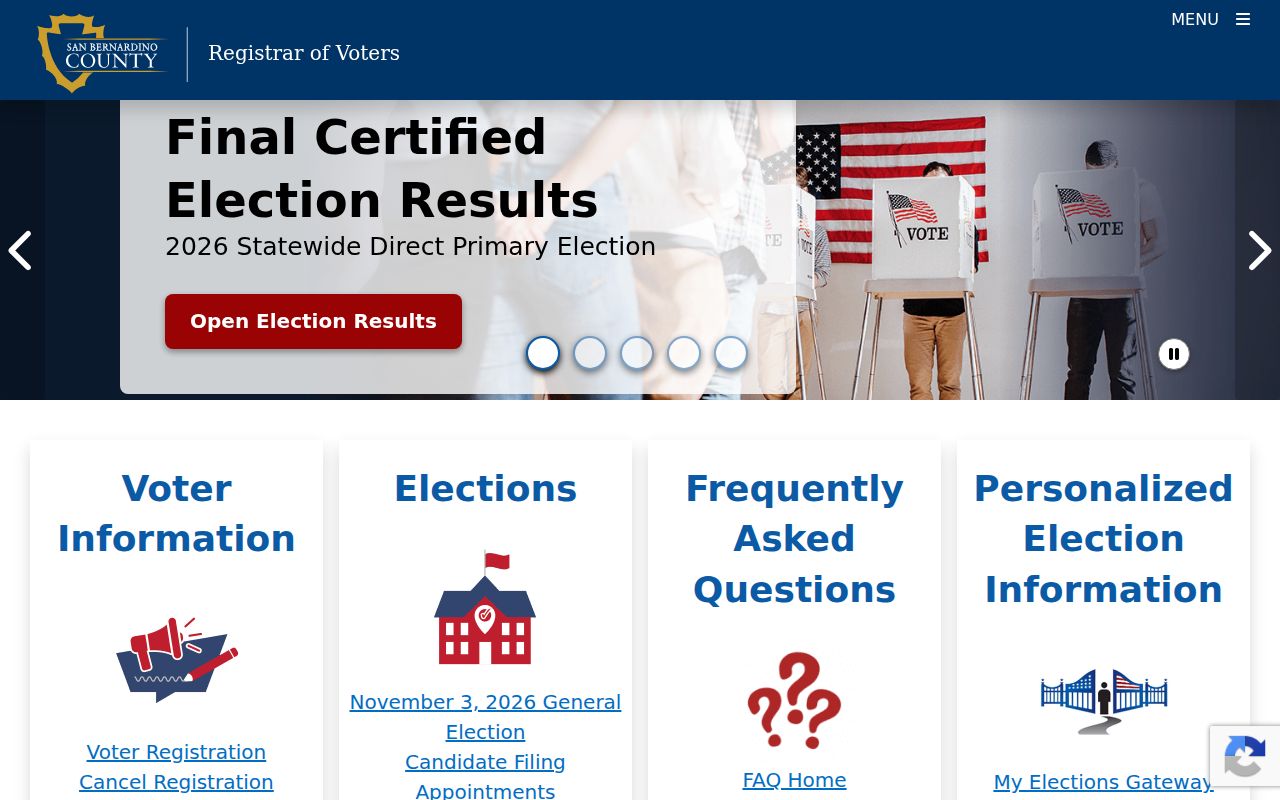
The Registrar image belongs in the match workflow because election records have their own identity and use controls. It should never be treated as an open public name directory.
- Write the name exactly as known, plus one unique clue and a likely date range.
- Check the assessor or another official source for a role and location connection.
- Search a second custodian, such as the recorder, court, business, or license system.
- Compare dates, role, venue, address or APN, then document what remains uncertain.
govPIMS Active and Inactive Names Matter
The San Bernardino County property guide documents owner-name searches with First Name and Last Name fields. Active Names focuses on current assessed names. Inactive Names can expose historic name variants in the system. Formatted Name uses a standard LAST, FIRST form, while Unformatted Name helps with inconsistent older entries. These modes make govPIMS unusually useful for a past-owner clue, but the result still concerns assessed property data.
The APN Properties panel separates Property Address or Main Situs, Current Owners, and Mailing Address. It also documents parcel status, tax status, use code, responsibility group, land-size band, values, prior roll years, parcel splits or mergers, owner history, and characteristics such as zoning, acreage, year built, square feet, beds, and baths where available. The assessor warns that its data does not determine legal ownership or permitted land use.
California Government Code § 7928.205 limits Internet or bulk display of specified names and addresses. A name search may therefore require authentication, a permitted counter view, or another lawful channel. A visible owner field is not a residence confirmation.
Use Adelanto Court Dockets Without a False Match
Adelanto matters belong to the San Bernardino Superior Court system, with the Victorville District serving High Desert users. The court portal's documented fields include case number, party or business name, first and last name, case type or category, and an optional date range where offered. Civil, criminal, family, probate, small claims, and traffic visibility differs. Search name order and spelling variants, then confirm the courthouse, filing date, party role, and disposition.
A public docket may show the case number, caption, filing date, courthouse, register-of-actions events, hearing dates, judicial officer, and status. The docket is metadata. A document may require a clerk order, a fee, or in-person access. Juvenile, adoption, sealed, confidential family, protected victim, and expunged or sealed criminal material will not appear like an ordinary public file.
The PACER Case Locator is the federal search source shown below.
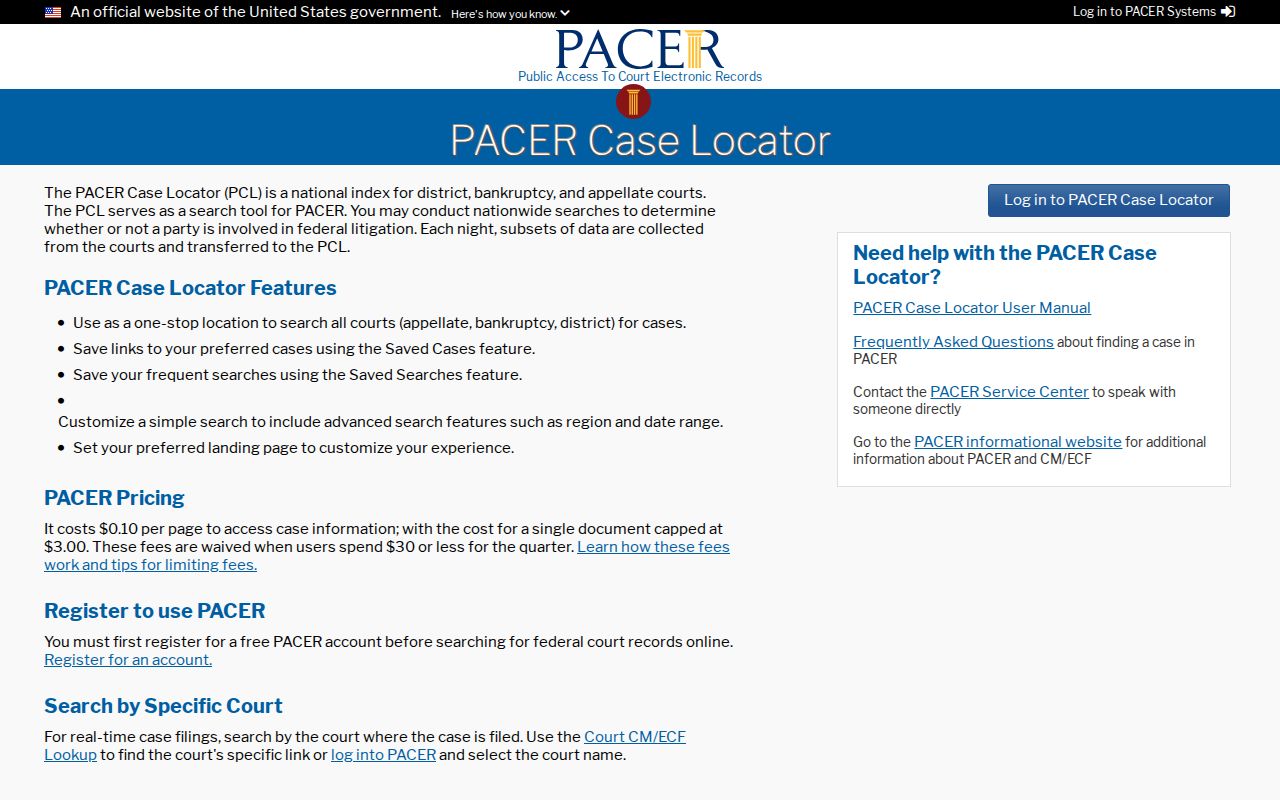
The federal PACER Case Locator image marks a separate route. PACER requires an account and covers federal matters, not an ordinary San Bernardino County case.
The federal PACER portal is the account and fee source shown below.
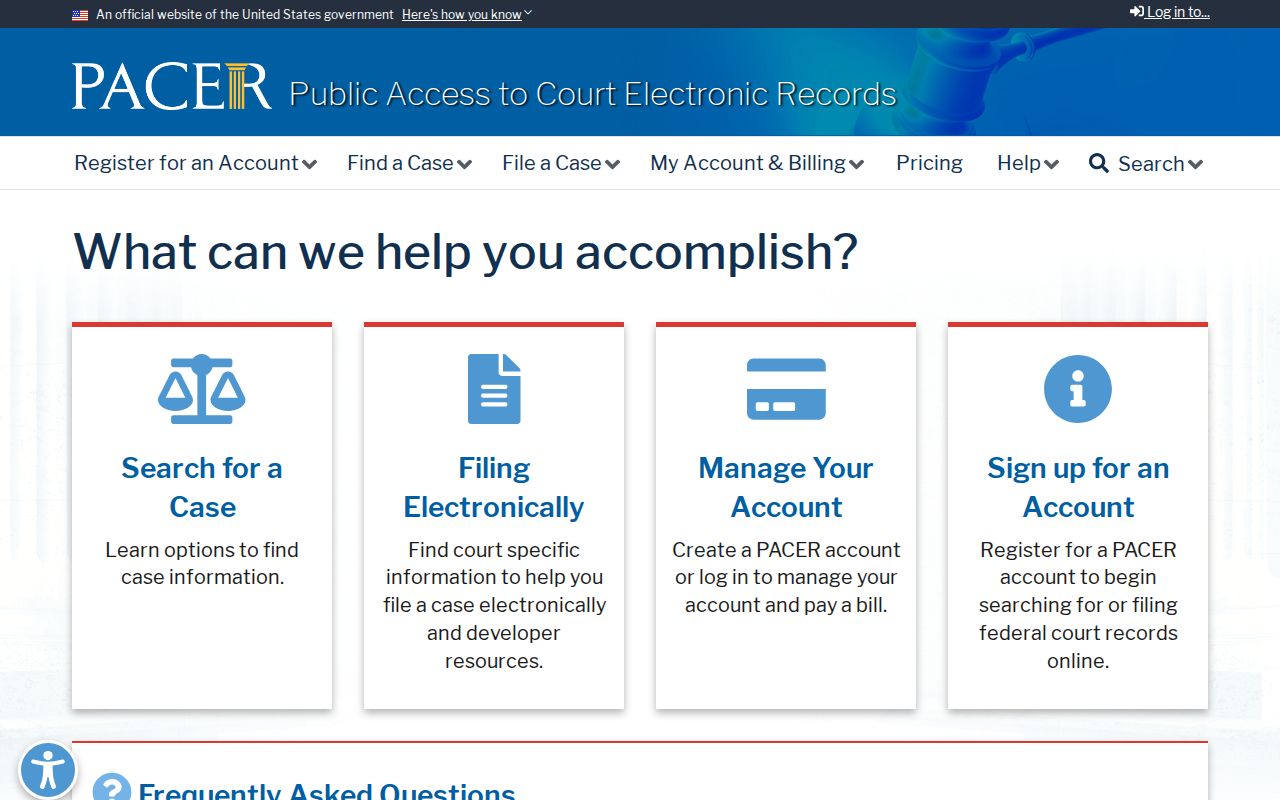
Federal records can be searched nationally or through the Central District of California, but sealed filings remain unavailable. California Rule of Court 2.503 explains why remote court access is narrower than courthouse access, and Rule 2.504 warns that a website record is not the official court record unless electronically certified.
The Central District of California court site is the federal venue source shown below.
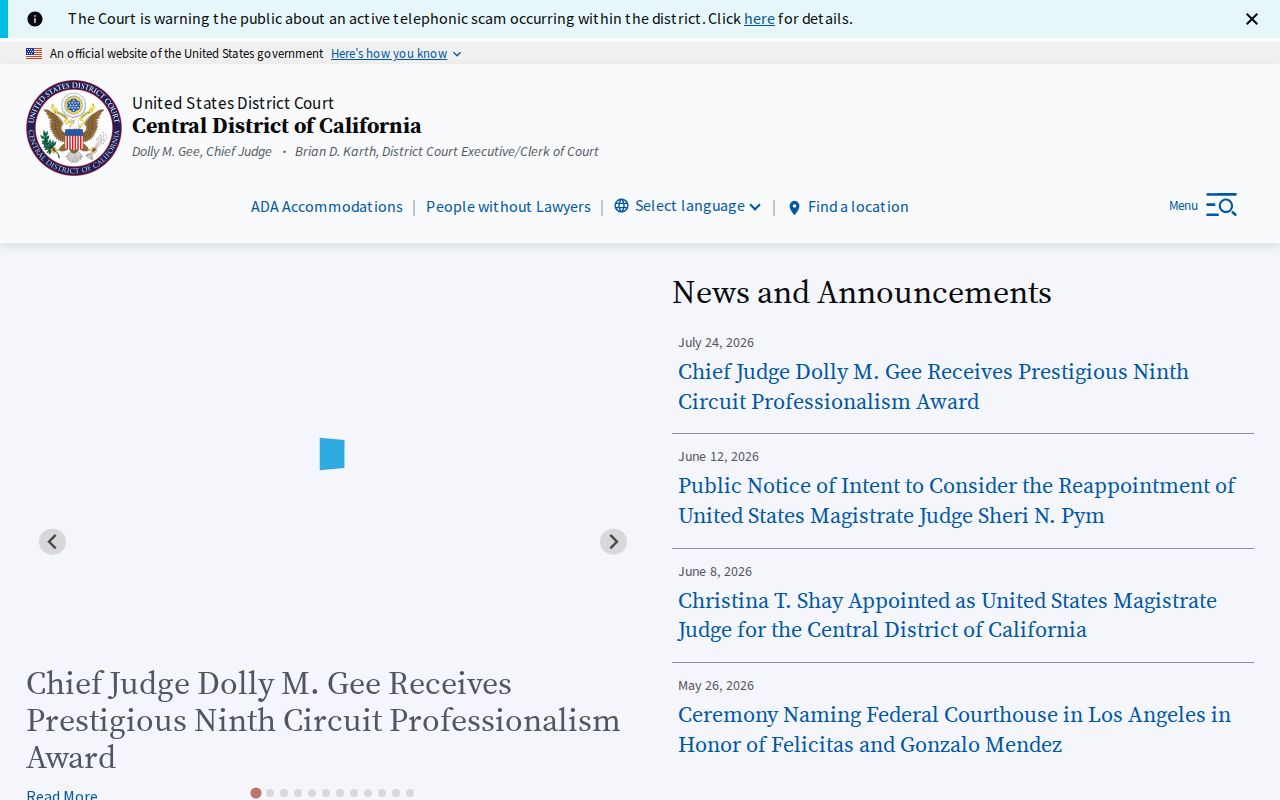
The Central District source keeps federal Adelanto-related cases separate from county court records and helps confirm which court system owns the file.
Vital Records for Marriage, Death, and Divorce
Vital records are powerful identity clues, but they are not a casual Adelanto resident lookup. The County Recorder-Clerk and California Department of Public Health handle different ordering paths. Birth, death, and public marriage copies may be available as authorized or informational copies. An authorized certified copy requires a statutory requester category. An informational copy is marked not valid to establish identity.
| Birth | County or CDPH; state 2026 fee listed as $31. |
|---|---|
| Death | County or CDPH; state 2026 fee listed as $26. |
| Public marriage | Recorder-Clerk or CDPH route; state 2026 fee listed as $19. |
| Confidential marriage | Limited access under Family Code § 509. |
| Dissolution | Decree from Superior Court; CDPH statistical certificate fee listed as $18. |
The county certified-copy application is the vital-record source shown below.
The county application image shows why an authorized-copy request asks for event details, relationship, signature, and in some mailed cases a notarized sworn statement. CDPH retains a fee after an unsuccessful search and may issue a Certificate of No Public Record. Adoption originals remain sealed unless a statutory or court process opens them.
Find an Adelanto Heir Through Probate
Probate is a useful route when the person sought is a decedent, heir, petitioner, or creditor in a public case. Modern probate belongs to the Superior Court. County Archives lists San Bernardino probate from 1853 through 1926 in its historical holdings. A public petition, notice, order, or register event may show family roles and addresses, while confidential reports and sealed information stay out of view.
Start with the decedent's full name and an approximate date. Check the county portal or Arrowhead catalog, preserve the case number, and read the role before following any person named in the file. An heir's appearance in a probate record is a historical relationship clue, not permission to publish a current address. Newspapers, cemetery material, and death certificates can corroborate the event through their own access rules.
Business and License Roles Need Careful Labels
Bizfile Online searches a California business by name or file number. Its detail page can show formation or registration date, jurisdiction, entity status, agent for service, street and mailing addresses, Statement of Information timing, and filing history. County fictitious business names and Adelanto business-license files add a local affiliation clue. These filings are self-reported and not certified; a registered agent is not necessarily an owner or resident.
California's Department of Consumer Affairs License Search accepts board, license type, license number, business name, first name, last name, and registry number. Board profiles differ, so retain the board name and source documents. A license status or public discipline link can corroborate a professional identity, but it should not be stretched into a home address claim.
The State Controller's Unclaimed Property search is another name lead. A reported holder or location can suggest where to look next, but a claim requires proof and the result is not a current residence assertion.
Why California Voter Status Is Not a Public People Search
My Voter Status asks an individual for identifying data to check their own registration. San Bernardino County's broader voter-file products require an application, a lawful purpose, beneficiary or authorizer information, security measures, signed agreements, and approval. Permitted categories include election, political, scholarly, journalistic, governmental, and record-review uses. Commercial use, harassment, insecure publication, and unauthorized transfer are prohibited.
Approved products may contain name, residence, mailing address, party preference, registration date, precinct, vote-by-mail status, supplied phone or email, and election participation history. The county's published product sheet sets fees and delivery rules that change over time. A casual Adelanto resident lookup should use the self-status tool only for the person who is checking their own status, not to assemble a list of residents by street. The county's voter information application, products and services sheet, and state privacy explanation describe the controlled route.
Note: A voter record can be a controlled evidence source, but California's privacy rules make it different from an open resident directory.
Legal Limits on an Adelanto Resident Lookup
California Safe at Home gives eligible survivors and threatened persons a substitute mailing address, mail forwarding, service-of-process agent, and confidential voter registration. It does not erase older records, and a private researcher should not try to reverse it. The Consumer Privacy Act and 2026 DROP system can help a qualifying consumer ask covered data brokers to delete or stop sharing data, but they do not rewrite an official deed, court file, or vital certificate.
If a record is wrong, correct it with the custodian. Ask the Assessor about assessment data, the Recorder about a lawful corrective instrument, the court about court procedure, or the Registrar about a registration update. A broker deletion request is not an official-record correction. A stale result should be documented as stale, not republished as fact.
Lawful personal use. An Adelanto resident lookup is appropriate for family history, reconnecting, estate research, and other lawful personal purposes. Never use a public record to stalk, harass, intimidate, or harm a person.