
Adelanto City Directory Collections, Mapped Honestly
Norman F. Feldheym Central Library in San Bernardino houses the strongest repository around. It is called the Arda Haenszel California Room. Its regional holdings are genuinely valuable for comparison. Yet the room publishes no official Adelanto title and no confirmed year run. Any city directory table should therefore show what the collection actually holds. It should also show what remains unverified. That distinction matters. It keeps a San Bernardino city volume from being advertised as an Adelanto residents directory it plainly is not.
| Collection | Years | Where Held | Access |
|---|---|---|---|
| San Bernardino city directories | 1887-1968 | Arda Haenszel California Room | Onsite; Adelanto inclusion unverified |
| San Bernardino criss-cross directories | 1976-present | California Room | Onsite; ask about High Desert coverage |
| Regional telephone books | 1918-present | California Room | Onsite; exact Adelanto runs unverified |
| San Bernardino Directory Co. regional volume | 1942 | FamilySearch catalog | Regional comparison; not an Adelanto sample |
| San Bernardino newspapers | 1894-1998 for the Sun | CDNC and California Room | Full text, OCR, or microfilm |
Regional shelves still reward the careful reader. Ask directly whether later Victor Valley or High Desert volumes include Adelanto, then inspect each title page for its coverage statement. The answer can shift from year to year, publisher to publisher, and from exchange to reverse-directory section.
Inside the California Room for Adelanto Research
The California Room sits inside Norman F. Feldheym Central Library at 555 W. 6th Street, San Bernardino, California 92410, reachable at 909-998-4251. Special-room hours run Monday and Tuesday 2 to 4, Wednesday 10 to 3, Thursday 2 to 4, and Saturday 2 to 4. Friday and Sunday are closed. Hours and access can change, so call first.
Request the High Desert telephone books, Victor Valley city directories, reverse directories, annuals, newspapers, family histories, cemetery records, and the San Bernardino Valley Genealogical Society Quarterlies from 1962 forward. The room also keeps the Great Register, census material from 1850 through 1920, obituary files, and photographs. Together these collections can turn a thin street directory lead into a real household story, without pretending a missing Adelanto volume exists.
Beyond the library, the California State Archives catalog opens a state-level route for records research.
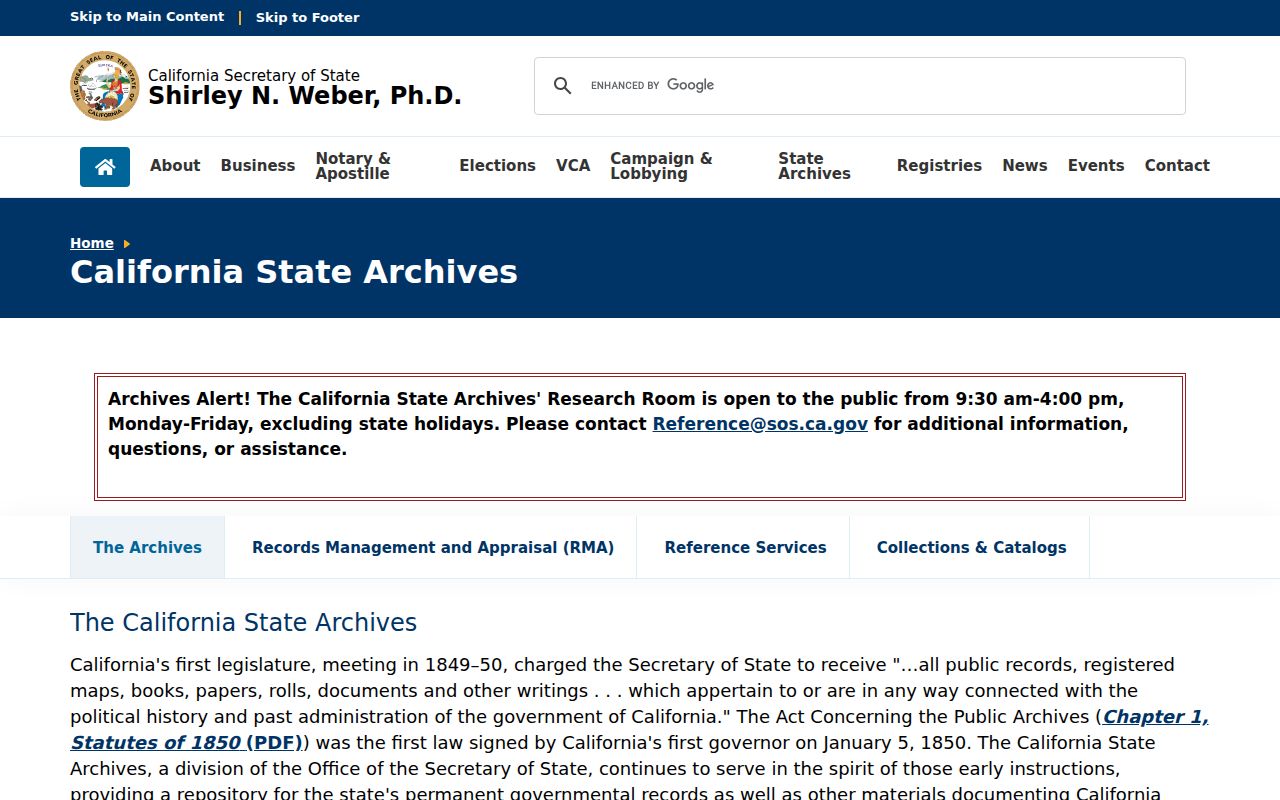
State Archives finding aids describe county-government, naturalization, probate, court, and local-government series. These may touch the High Desert. For San Bernardino-created originals, the County Archives and FamilySearch often serve better. Each route serves a different records goal.
Closer to home, the County Library information page defines the local service boundary.
That boundary is simple. The County Library offers catalog and database help, but staff do not search and copy obituaries for readers.
Before You Call a Book an Adelanto Directory
Adelanto was founded in 1915. That is decades after the San Bernardino city directory run began. So a title can be useful for comparison without being a local street directory for this town. The 1942 San Bernardino Directory Co. volume in the FamilySearch catalog covers San Bernardino, Colton, and Rialto. It names no Adelanto. No authoritative digitized Adelanto entry is publicly inspectable.
Before trusting any volume, check the title page and publisher statement. Also check the geographic list, exchange, street index, and abbreviation key. A volume listing San Bernardino city only cannot prove an Adelanto household. A regional telephone book with a High Desert exchange deserves a note on its exact coverage and year. A reverse directory may omit the city. Treat the missing name as an untested gap rather than proof a household was absent.
For county-level originals, the County Archives Arrowhead catalog lets you search historical series. This avoids forcing a county record into a city-directory label.
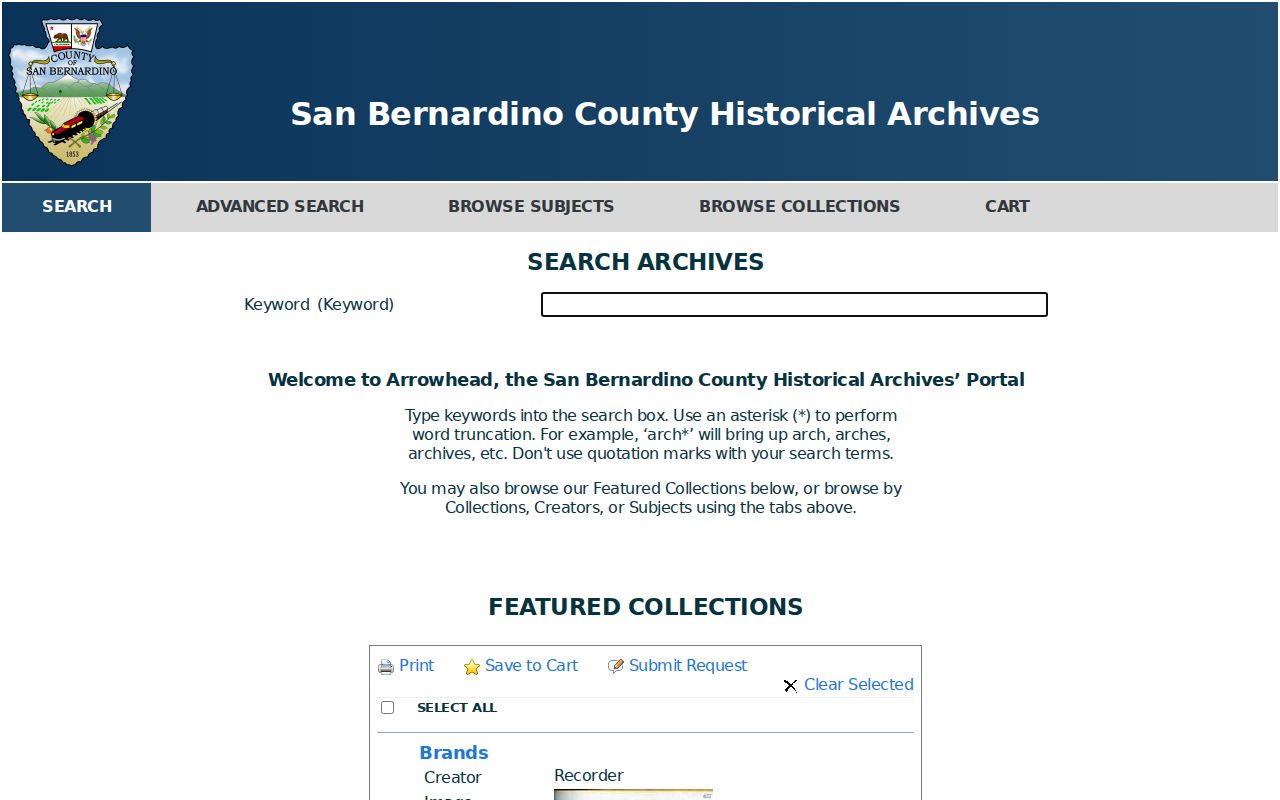
The County Archives catalog offers a search and browse interface for historical records. It works well for locating a series on its own terms.
Reading an Adelanto City Directory Entry
A city directory entry is a checklist, not a biography. No verified Adelanto sample exists. The fields here describe what to expect in a confirmed volume. Preserve original spellings and marks. A resident lookup may show a head of household, a spouse in parentheses, and an occupation. It may also show an address, a widow notation, and a symbol marking owner or renter. Whatever appears describes only that year's listed entry.
| Name | Surname and given name, sometimes with initials or a spouse in parentheses. |
|---|---|
| Occupation | Work description or employer as printed in the volume. |
| Address | House number and street, often with a residence or boarding abbreviation. |
| Owner or renter mark | A symbol or letter used by some publishers to describe the listing. |
| Widow notation | A short family clue, such as a surviving spouse reference. |
- Criss-cross section
- The reverse half of a directory, arranged by street and number.
- Householder index
- A name index intended to point to the household entry or address.
- Abbreviation key
- The publisher's legend for occupations, relationships, residence marks, and other shorthand.
Index and image are different things. An index points to an entry; the scanned page or physical volume carries the context and publisher marks. Photograph the title page and abbreviation key before copying names, so a later reader can understand the record.
When Adelanto Directories Give Way to Newspapers
An incomplete city directory leaves real gaps. Adelanto newspapers often close them. The California Digital Newspaper Collection includes the San Bernardino Sun from 1894 to 1998. It also covers the Evening Transcript from 1898 to 1902, the Evening Index or San Bernardino News from 1912 to 1918, the Weekly Courier from 1891 to 1894, and the Weekly Sun from 1895 to 1905. Search the city name alongside a surname. Try a street, tract, school, George Air Force Base, military unit, or a neighboring community too. A simple name query rarely finds everything on its own.
OCR is the usual culprit when a search comes up empty. It misses names, punctuation, and hyphenated surnames with surprising regularity. So try a short surname. Add a street fragment, a community label, and a date range instead of one long phrase. Land sales, school notices, base news, civic events, marriage notices, probate, and obituaries can all tie a person to Adelanto. This holds true even when no directory volume lists the address. One caution applies to obituaries. The County Library states that staff do not search and copy them. Arrive with a citation, or use the specialist room's date-specific service.
Note: A newspaper mention is a time-stamped clue; pair it with a parcel, census, deed, directory, or vital record before treating it as a household link.
Trace Adelanto Households Across Directory Years
A historical city directory works best as one point in a longer household trail. Start with the volume closest to the person's known address or occupation. Then repeat the search across adjacent years that exist. Keep track of moves, spelling changes, and spouse references. Notice whether a volume lists names alphabetically or by street order. That difference changes what an entry can tell you. Finally, pair the directory result with a census schedule, newspaper, deed, or probate record. Together, these sources confirm the trail.
- Confirm that the volume covers Adelanto, the High Desert, or the relevant telephone exchange.
- Search surname variants and initials in the alphabetical section, copying the entry exactly.
- Use a reverse section, when present, to see the street sequence and nearby listed households.
- Repeat in adjacent years and pair directory decades with the 1920, 1930, 1940, or 1950 census.
- Close a deceased person's trail with a newspaper, cemetery, death record, or public probate file.
A name dropping out of one volume can mean many things. A move, a death, or an unlisted telephone look identical. Missing coverage and a rural-route address do as well. An OCR failure looks the same from the outside. No single absence settles the question. The newest public federal census is 1950 under the 72-year rule. Later household history therefore leans on newspapers, telephone books, deeds, public filings, and voluntary records.
Pair an Adelanto City Directory with Census Records
Census schedules and city directories each answer a different question. A census gives a household snapshot. A directory can fill an intervening year with a street, occupation, or spouse clue. Compare addresses and household members. Never assume the directory's "head" accounts for every resident. The owner may live elsewhere. A boarder may be listed. A relative may appear under a different surname. Regional census holdings at the county cover 1850 through 1920 in the California Room. Federal public schedules run through 1950 under the release rule.
Probate supplies another kind of link. County Archives holds San Bernardino probate from 1853 through 1926. Modern cases belong to the Superior Court. A petition, notice, or order may name a decedent, a petitioner, heirs, creditors, and their addresses. Confidential reports and sealed material stay withheld. Use these records to follow a public family or property event. Do not use them to expose a living person's private details.
When a directory entry needs a current match, the Adelanto resident lookup page provides modern court, assessor, vital, and license cross-checks. It does so without asking the historical volume to carry more weight than it can.
The Archives Behind Adelanto's Earlier Names
San Bernardino County dates to 1853, long before Adelanto's own story begins. County-level archives can therefore hold the earlier land, probate, voter, governance, or naturalization trail. Those records may sit under county or community labels rather than the city's name. The County Archives access point and Great Registers may carry occupation, age, physical description, and naturalization facts. It depends on the volume. Lot books run from 1895 to about 1950. They show taxpayer, legal description, and land or improvement values.
The repository itself has a history. Archives moved in 2006 from an inadequate Rialto Avenue site to 1806 Commercenter West. A later Grand Jury report described both its rare county material and its infrastructure limits. The building is currently reported closed. Use the Arrowhead catalog, ARC-DLRECArchive@arc.sbcounty.gov, or 909-387-1001 to confirm access and series availability. The county Archives Month notice and the Adelanto City Clerk custody code both help. They separate county history from later municipal records.
Adelanto's Directory Timeline Has a County First
| Period | Directory and Records Context |
|---|---|
| 1887-1914 | San Bernardino city volumes predate Adelanto's founding; do not call them Adelanto directories without verified coverage. |
| 1915-1969 | Adelanto community, county, school, newspaper, telephone, and base-era sources carry the local trail. |
| 1970-1992 | Municipal City Clerk, planning, permit, licensing, and council records join the county sources. |
| 1992-present | Charter-city records and current map, parcel, court, and state portals form the modern layer. |
One honest gap deserves a flag here. Regional collections and practical search paths exist, but no verified Adelanto city-directory run has been established, and any timeline should say so plainly. That gap is actually useful, because it tells a family historian exactly where the next hour is best spent. Census QuickFacts offers current community context. It is not, however, a household directory.