
Sources for Previous Residents of an Adelanto Address
House history is a layered search. Deeds follow land transfers. Assessment records show taxpayers, values, and parcel identity. Directories and census schedules supply household clues. Permits date work and name applicants. Newspapers, obituaries, and probate can explain a move, death, or family connection. No single source gives every previous resident, so the era and record role belong beside every name.
| Source | Years It Covers | Where Held | What It Shows |
|---|---|---|---|
| Assessor lot and parcel books | 1895-about 1950 | San Bernardino County Archives | Taxpayer, legal description, land and improvement values |
| Recorder Official Records index | Advertised 1925-present | County ARC | Grantor, grantee, date, title, document number |
| Recorder chain workflow | 1958-present online or office; earlier microfilm | ARC and main Recorder | Seller-to-prior-buyer links by legal description |
| Building permits | About 1936 forward, with city variation | Issuing city or county | Construction or alteration chronology, applicant, contractor |
| Federal census | Through 1950 public schedules | NARA, FamilySearch, library | Household snapshot and location |
| Regional telephone books | 1918-present holdings | California Room | Listed subscriber and address when Adelanto is covered |
| Regional criss-cross directories | 1976-present holdings | California Room | Reverse street listing when Adelanto coverage is verified |
The table has two honest gaps. The research did not verify an Adelanto-specific criss-cross year run, and it found no digitized Adelanto Sanborn sheet. Regional holdings can still help, but coverage must be checked before a missing name becomes a conclusion.
Start Previous-Resident Research with Today's APN
A stable land identity makes a backward search possible. Use San Bernardino County govPIMS Address Search to find the situs parcel. The direct govPIMS entry is the current parcel route. Record the APN, current assessed owner if lawfully visible, mailing field, parcel status, and legal description. The APN and legal description are stronger continuity keys than a modern street label, especially when an early record uses a tract and lot or section-township-range description.
govPIMS separates Main Situs, Current Owners, and Mailing Address. It also documents parcel history, four prior roll years, splits, mergers, lot-line adjustments, owner history, supplements, map links, and reports. The assessor does not determine legal ownership or occupancy. Use its parcel identity to reach the Recorder, not as a complete list of previous residents.
The County ARC services page is the office source shown below.
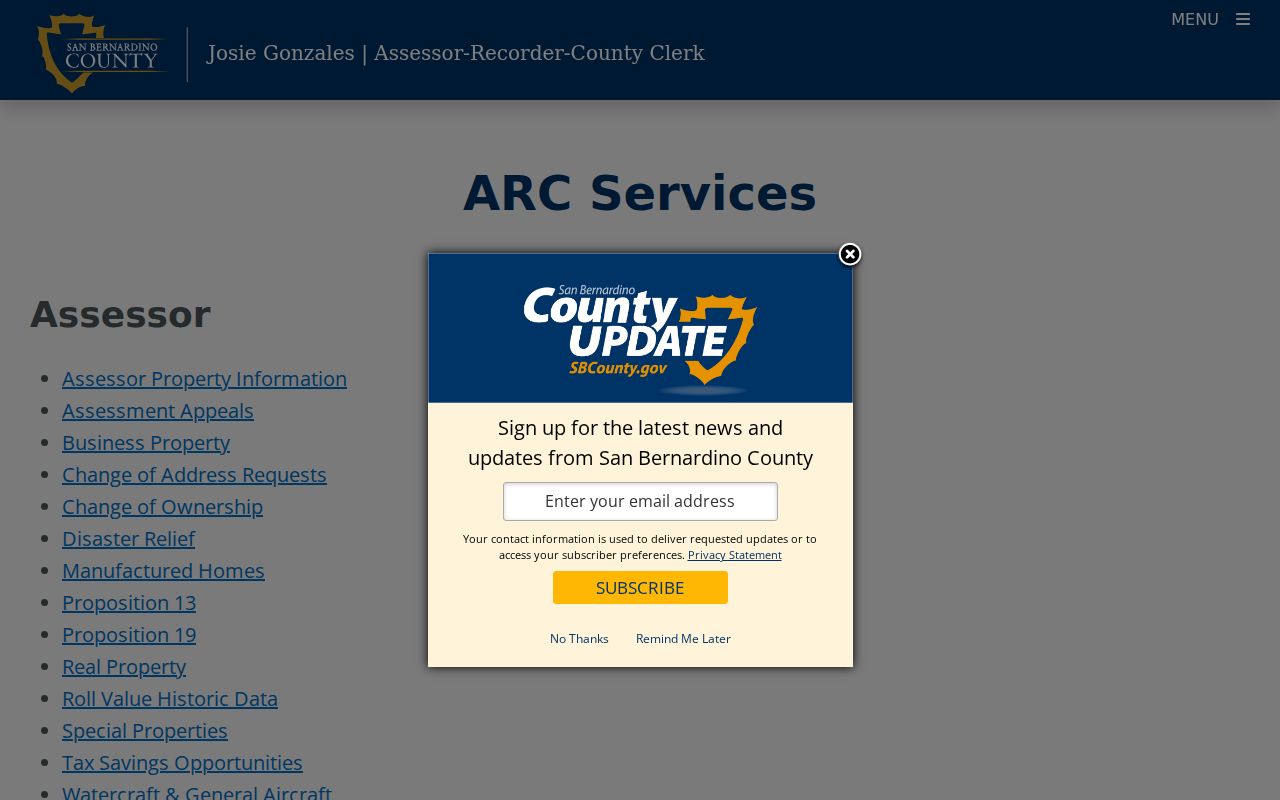
The ARC services image marks the county office family that keeps the current parcel and deed trail together, even though each record set has a different access rule.
Trace Adelanto Past Owners Through the Deed Chain
The county's house-history method is iterative. Obtain the current owner and legal description. Search that owner as a grantee or buyer in the Recorder's index. Match the legal description and document. Read the seller or grantor. Search the seller as an earlier grantee. Repeat backward, recording document number, date, title, and the legal description at every step.
- Pull the current APN, owner field, and legal description from the assessor.
- Search the current owner in the Official Records index and compare candidate deeds.
- Open or order the instrument when the index metadata points to the right parcel.
- Carry the seller's name backward as the prior buyer, while matching the land description.
- Move to the counter or older microfilm when the online window no longer reaches the chain.
- Grantor
- The party transferring an interest in the recorded instrument.
- Grantee
- The party receiving the interest or appearing as the buyer in the index.
- Chain of title
- The linked sequence of transfers for the same land.
- Legal description
- Land language using a subdivision, lot, block, or section-township-range identity.
The Recorder advertises a 1925-present online index, while the county guide describes a 1958-present chain workflow and earlier decade microfilm. Preserve both statements. The index is a card-catalog-like aid; the recorded instrument is the evidence that carries the legal description and transfer terms.
Resolve the Recorder's 1925 and 1958 Cutoffs
Two county descriptions can look inconsistent until their purposes are separated. The official records landing page advertises a document index from 1925 to the present. The house-history guide describes a grantor-grantee workflow from 1958 forward and says pre-1958 indexes are organized on decade microfilm at the main Recorder. For previous residents, use 1925 as the advertised universe and plan a counter or microfilm check for the earlier chain.
The online result identifies document number, recording date, document title, grantor, and grantee. It does not supply a complete image library. The county says instruments can be viewed at the Hall of Records in San Bernardino or the High Desert Government Center in Hesperia. Mail requests use a copy form and payment; the county says mail returns generally take one to two weeks after receipt. Appointments are strongly encouraged.
The Recorder Public Access System is the index source shown below.
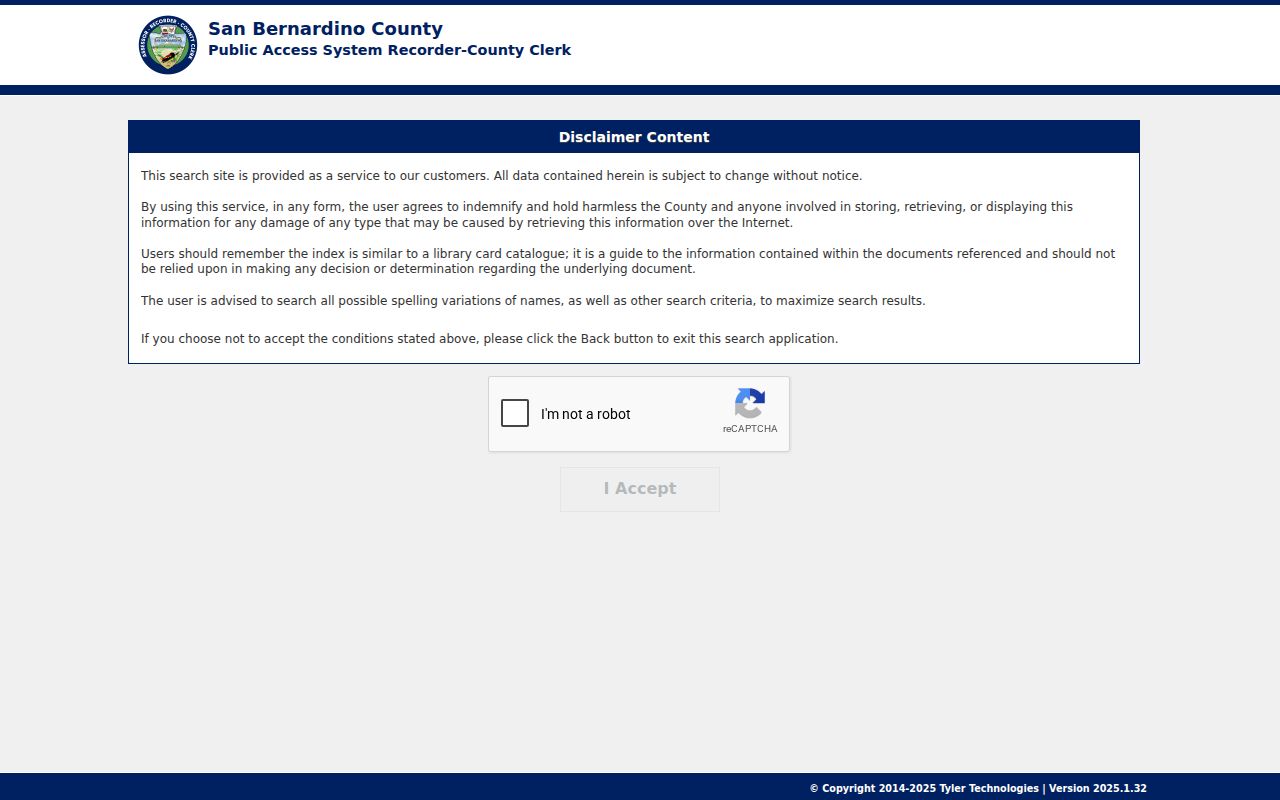
The Recorder public-access image shows the disclaimer and index entry point. Treat the result as a pointer to the instrument, not as the whole previous-resident record.
Read Adelanto Lot Books from 1895 to About 1950
San Bernardino County Archives lot and parcel books can extend a property trail before modern online systems. The research says they may show taxpayer, school district, legal description, land value, improvement value, marketable tree or vine value, and water value. An improvement value can help date when a parcel changed, which is a useful human-use clue for orchard and early land research.
Do not overread the field. A lot book does not distinguish a house from a barn, shed, or other structure. A taxpayer is not automatically an occupant, and a value change is not a complete building permit. Use the legal description to connect the book to later APN and deed records, then add newspaper, census, or directory evidence for the people question.
Use Permits to Date Work, Not Previous Residents
Building and planning records can name an applicant, owner, contractor, project address, APN, inspection date, and work type when the record is releasable. The research places general county permit evidence around 1936 forward, with city variation. Adelanto incorporated in 1970, so older work may sit with the county and later work may begin with the City Clerk or city department.
A permit dates a construction or alteration event. It does not prove that the applicant lived at the address, and it does not list every prior household. A business license or home-occupation file carries the same role limit. Ask for a focused address, APN, project type, and date range, then preserve the name as applicant, contractor, or owner rather than rewriting it as resident.
Pair Directories and Census for Past Households
Owners are only one part of previous residents research. A regional telephone book or criss-cross directory may show a listed subscriber at a street number. A census schedule may show a household at a decennial snapshot. A newspaper may place a person at an Adelanto address during a sale, school event, military-base story, marriage, or obituary. The California Room's exact Adelanto coverage remains unverified, so inspect the geographic statement first.
- Confirm the volume covers Adelanto or the relevant High Desert exchange.
- Copy the name, spouse, occupation, street, number, and listing marks exactly.
- Repeat in adjacent years and compare the same parcel, not just the same street name.
- Pair the directory with the 1920, 1930, 1940, or 1950 census when dates align.
- Use newspaper, death, cemetery, or probate evidence to explain a later disappearance.
The historical shelf and its regional limits are described in the Adelanto city directory collections page. This previous residents trail uses those collections for one address rather than re-describing every directory source.
Close the Trail with Obituary and Probate Evidence
Obituaries, cemetery records, death certificates, and probate can close a past household trail after a person leaves an address or dies. The County Library points researchers to FamilySearch, cemetery or interment sources, and other obituary paths, but it says staff do not search and copy obituaries. The California Room offers prepaid date-specific mail research at $20 per hour or fraction plus $0.25 per page.
Probate files can identify a decedent, petitioner, heirs, creditors, and public case events. Modern files belong to Superior Court. County Archives lists probate from 1853 through 1926. These are corroborating records, not permission to expose a living relative or infer a current address. Confirm dates and relationships with the custodian's own record and copy rules.
The California vital-record fee page is the state source shown below.
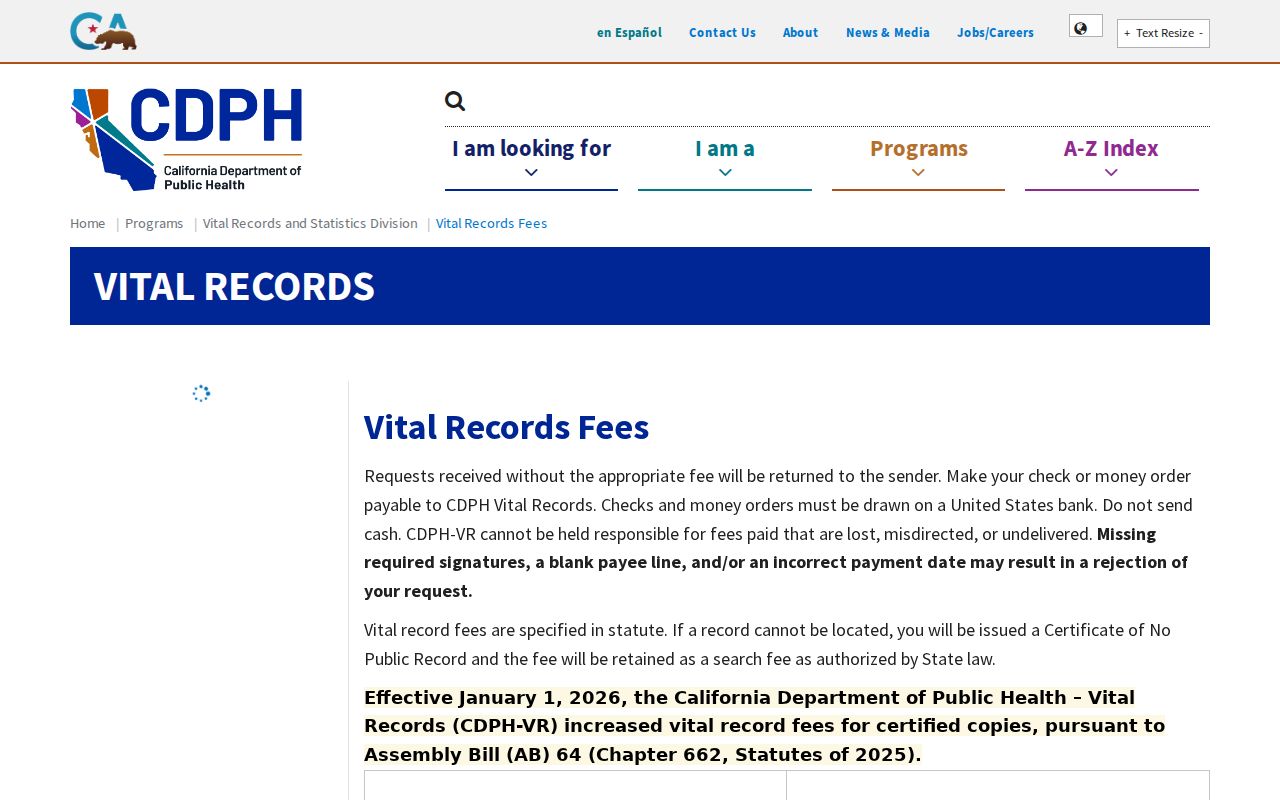
The state fee image is a reminder that a death or marriage record has its own application, copy type, eligibility, and current fee path. A historical index does not automatically grant modern certified-copy access.
What to Do Without an Adelanto Sanborn Map
The research did not locate an official Adelanto-specific Sanborn sheet or verified sheet years in the Library of Congress Sanborn catalog. Do not substitute a San Bernardino city map. For a house history, use parcel maps, lot books, legal descriptions, assessor characteristics, permits, aerial or city map layers, newspapers, and the deed chain as separate evidence.
Early Adelanto land may have a rural-route, tract, lot, or township-range identity. Carry every version forward in a research note. A missing Sanborn sheet is a documented gap, not proof that the building or household never existed. The best previous residents result is often a stack of modest, dated clues that all point to the same parcel. The County Archives access point can help confirm whether an older lot or map series is available.
Lawful house history. Previous residents research is for family history, property history, and personal curiosity. Do not use a deed, directory, obituary, or map to track, harass, intimidate, or harm a living person.